Installing a solid fuel boiler: preparation rules and tips
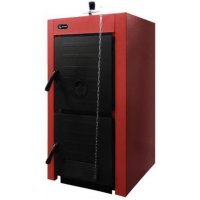
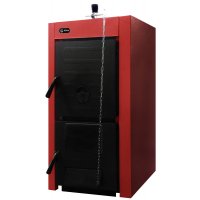
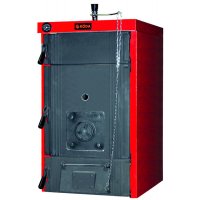
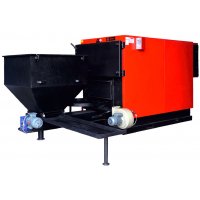
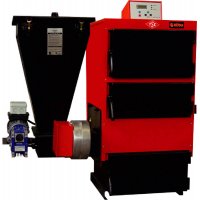
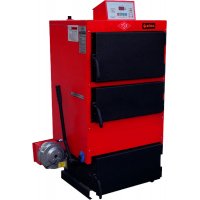
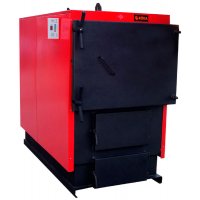
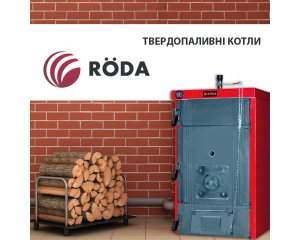
Solid fuel boiler RODA is a device that heats a room by burning solid fuel. The most common: firewood (pieces of wood); pellets (raw materials in the form of granules); coal (fuel fossil); peat briquettes (pressed peat).
Solid fuel boilers are divided into several types according to the alloy material: cast iron and steel . And how to download:
- manual - manual loading through the loading door;
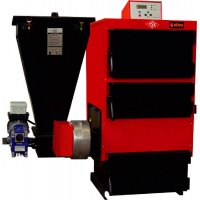
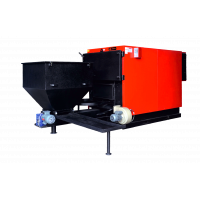
- automatic - fuel is loaded into special bunkers, entering the furnace with the help of an auger. They can work without human intervention for weeks.
Features of cast iron boilers:
- Long service life;
- Susceptible to temperature changes and shocks;
- Not so sensitive to scale compared to steel;
- Corrosion resistant;
- Non-volatile;
- Unpretentious to the quality of fuel;
- It is possible to connect a burner;
- They have compact dimensions.
Features of steel boilers:

- High efficiency;
- Impact resistant;
- Less sensitive to temperature changes;
- Automatic maintenance of coolant temperature;
- Fuel bunker with fire protection;
- Automatic ignition;
- Easy cleaning of the heat exchanger;
- Affordable price;
- Digital control panel.
Installation of a solid fuel boiler
Due to their impressive size and weight, these boilers are produced only in the floor version. To install this type of boiler, no permits are required, it is enough to follow the safety rules according to the instructions. Installing a solid fuel boiler price , deadline, purchase of additional components depends on the level of complexity and the desired result in the end.
Basic rules for the installation of solid fuel boilers:
- Choosing a place to install the boiler. It will be correct to allocate a separate room for the boiler. Its area depends on the power and dimensions of the device itself, but not less than 8 sq.m. The room can be inside the house or an extension, a basement. It is forbidden to use rooms in the back of the house, since one of the walls must necessarily face the street. This is necessary not only from the point of view of safety in case of fire, but also to remove the chimney;
- Floor preparation. Remove or secure a floor structure that is easily flammable. It is good to make the floor concrete or cover it with heat-resistant material with a protrusion from the boiler of at least 80 cm, in case the heat falls out of the furnace;
- Walls and distance . It is important to indent from the walls (side and back) at least half a meter for easy access for cleaning, maintenance and ventilation. Cover them with non-combustible material if the walls are not made of brick or tile. A hole must be made in the wall for ventilation;
- Ceiling and roof of the house. The chimney will come into contact with these parts of the room, which must be insulated with a casing. The smoke can be so hot that it adversely affects the iron and wooden beams, therefore it is better to protect them;
- Ventilation . Good ventilation must be ensured, as dust and smoke can enter the room during the furnace;
- Heating system. The boiler itself will not heat the room, it is necessary to make pipes and connect them. Purchase additional equipment and accessories.
Modern solid fuel technology, an excellent replacement for devices that operate on ever-rising resources. We recommend entrusting the selection and installation of solid fuel boilers to specialists who specialize in this type of equipment. The cost of installing a solid fuel boiler in a private house or other type of premises depends on the boiler itself and the level of complexity of installation work. Installation with the help of organizations recommended by the manufacturer guarantees you a professional approach and subsequent safe operation.
Related articles
Types, types and sizes of solid fuel boilers. (material and installation)
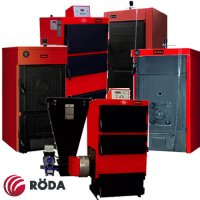
Solid fuel boilers, their types, types. How to choose the right solid fuel boiler. Selection of fuel for a solid fuel boiler...
What equipment is needed for the heating system of a house or apartment
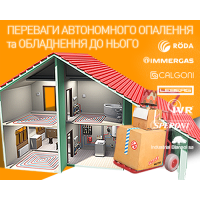
Consider what are the autonomous heating systems of an apartment or a private house. What equipment is used to organize an individual heating system...