Circulation pumps for heating ТМ Roda
Not in such a distant past, in Ukraine, in private homes, a thermosyphon heating system was installed, that is, a system with natural water circulation.
This design, in comparison with modern heating systems, was quite specific.
The boiler had to be installed as low as possible in relation to pipes and batteries (heating radiators).
And the pipes themselves had to be mounted with certain slopes, with a minimum number of turns, and so on.
Naturally, such work required a great experience of the master and qualifications in general.
But, often the system was made with violations, and from this, the nearest batteries to the boiler became very hot, and the remote ones were barely warm, if not cold at all.
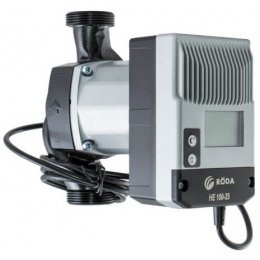
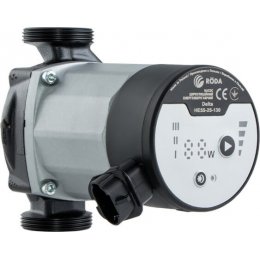
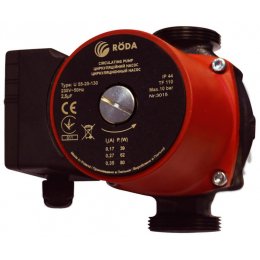
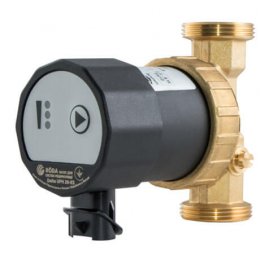
So it was until the engineers created circulation pumps for heating , which, today, there is a large selection in the model portfolio of TM Roda .
Roda heating circulation pump: what is it?
The circulation pump is the most important part of a modern heating system.
Its task is to pump the coolant from the heat generator ( heating boiler , solar system ), to the heat transfer point ( radiator , fan coil, warm floor).
The Roda company presents two types of circulation pumps for heating :
- traditional circulation pump;
- energy saving circulation pump .
The energy-saving Delfa series circulation pump allows you to reduce energy consumption by up to 80%.
This indicator is achieved due to the operation of the pump in proportion to the pressure in the heating system.
The pump adjusts the power of work to the level of pressure, thereby not overconsuming consumption when it is not necessary.
How to choose a heating circulation pump Rod?
The main parameters that will help you choose the right circulation pump for your heating system are:
- pipe diameter;
- maximum resistance in the heating system;
- maximum pump efficiency.
To choose a circulation pump , it is necessary to determine two indicators of the heating system:
- Performance (Q) - the amount of water (m3) per hour that the pump must pump.
- Head (H) - hydraulic resistance in the system, which must be overcome by the pump.