Heaters in comparison. Which one to choose, so as not to miscalculate
Healthy competition is normal, and even good. It allows manufacturers to move forward, improve and invent technologies in a modern format, thereby attracting buyers. However, in pursuit of sales, the main thing is often forgotten - the truth. Being honest with your consumer is an important and necessary component of a quality relationship.
The closer the heating season, the more actively the Internet is filled with information about current heating technology. Today our attention is riveted to heating devices that enjoy considerable attention - electric convectors and ceramic panels. The technical department of TM RODA specialists will help us figure it out. With their help, we will analyze the most frequent questions and contradictions. Let's talk about important aspects for the consumer: how to achieve high-quality heating with maximum savings and, ultimately, get the expected result.
What are an electric convector and a ceramic panel?
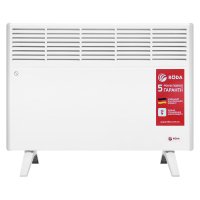
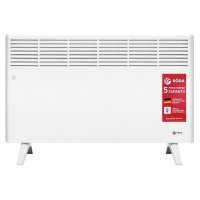
- An electric convector is a device that heats a room by heat exchange and air circulation. Cold air descends and warm air rises. This means that cold air enters the convector through the bottom hole, heats it up with the help of a heating element and releases already warm air into the room. Rising, the air cools and falls again, the process repeats.
- Ceramic panel - these are panel-type heaters with infrared, convective type of heating. The heating element supplies heat to the ceramic panel, which generates infrared radiation.
On the Internet you can find a lot of information on these types of heaters, including contradictory ones, which can be easily confused. Below, briefly about the main things together with our technical specialist for heating technology RODA ;
Who has the highest heating rate?
- It will be possible to warm up the air in the room faster with an electric convector. The influx of warm air can be felt immediately after turning it on. Infrared heaters are inferior in speed, but position themselves in that they can heat objects, as well as walls. Everything is correct, but for this you need to create the necessary conditions: the object cannot be further than 1 meter from the heater, and there should be no influences or obstacles on the rays. In other cases (over longer distances), air is heated by convective heat exchange, and is no different from other heating equipment, for example, a standard convector; 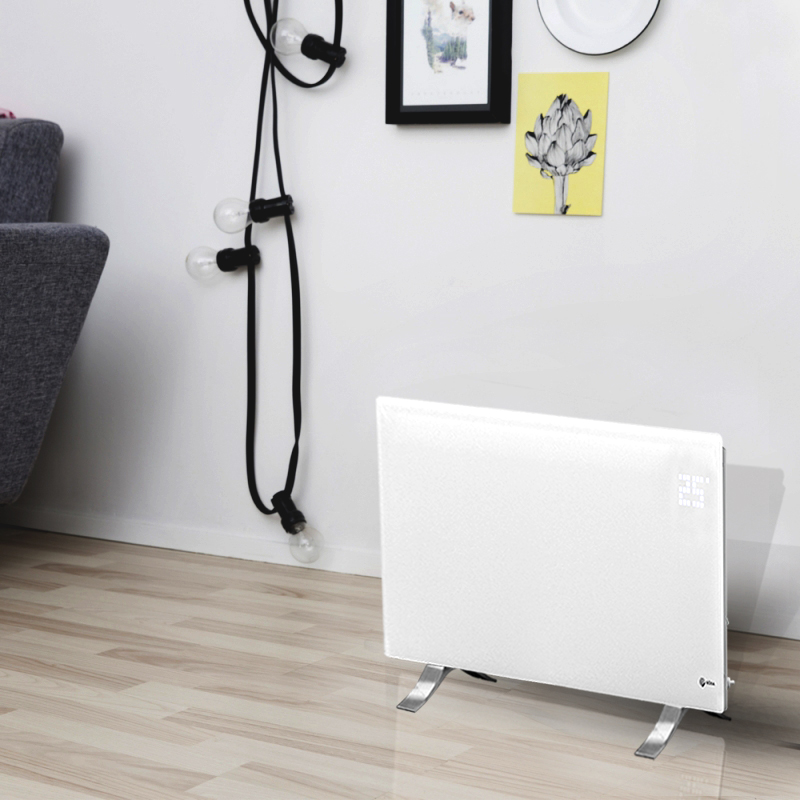
Does the dust that settles on the appliances burn and give off an unpleasant odor?
- Yes, if we are talking about a very dusty room, like factories, workshops, industries. But it is difficult to call such conditions residential, it would be better to use other heating equipment;
What is safer: a convector or an IR panel?
- Today, manufacturers pay a lot of attention to the level of device security. Electric convectors RODA are protected from power surges, overheating (built-in temperature limiter), increased moisture protection class (IP24) will allow you to use the heater even in the bathroom.
The data, which is often presented as an advantage in relation to overheating temperature control, is actually regulated by the safety standards DSTU EN 60335-2-30:2015: the temperature of metal surfaces is not higher than 85K, and glass, ceramics, etc. up to 100K. Normalization of these values for heating devices is designed for the safe use of equipment in conditions of abnormal operation during high voltage or overheating;
Is it true that the convector dries the air, but the IR panel does not?
- No that's not true. The humidity in the room decreases no matter what kind of heating device is used - this is physics. There is an opinion that heaters "eat" oxygen, but this is not so. In fact, during the heating season, we open windows less, but at the same time turn on electrical appliances more, fresh air enters less, moisture leaves, a feeling of dryness and lack of oxygen is created;
What are the long beams of infrared heaters that evenly distribute heat throughout the room?
- To obtain such a result, the wavelength must be comparable to the area of the surfaces that are irradiated with a distance of no more than 1.5 meters. If we take real living quarters, they are much larger. That is, in standard room sizes, the IR heater works on the principle of a conventional convector;
What is the best heater to use?
The efficiency of electric convectors is achieved by 99% due to natural air convection, since electricity is not spent on additional elements of the equipment. All consumed energy is converted into heat .
Under the same conditions, the result will be the same. But it all depends on the area of the room and the power of the heater, since it is known that electric convectors have a power range from 500 to 2500 W, which indicates a wide area. Can be used as the main and additional source of heat. While infrared heaters with a power of 350 - 800 W are recommended for small areas with a distance of no more than 1-1.5 meters from the heater to create the most comfortable conditions. If the room is large, it is recommended to install several ceramic IR panels.
By putting both heaters of the same power in identical conditions, you will receive the operating costs equally for both heaters;
Which heater is cheaper?
- If we take into account the cost of 1 kW of installed capacity of heaters today, then the difference will be about three times in favor of electric convectors - they are cheaper.
As we can see, any technique has its own characteristics and conditions for obtaining the maximum result. The ceramic panel creates more natural heat, but its area of action is limited - 1-1.5 m in area. The convector will heat the room faster, and also has a wide range of models with the ability to choose the device both in the smallest room and in a larger room. We hope our article was useful for you, and helped in choosing the right heat source for your home.
Related articles
Heaters in comparison. Which one to choose, so as not to miscalculate
An electric convector is a device that heats a room by heat exchange and air circulation. Cold air descends and warm air rises. Ceramic panel - these..
Electric batteries in a private house - Roda convectors in Ukraine
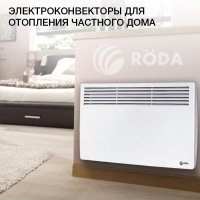
What are the main criteria for choosing an electric convector for a private house? Heating the house with an electric heater is one of the easiest opt..
What is the best heater for a house or apartment
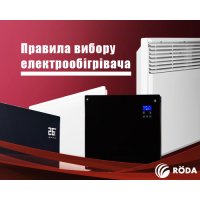
How to choose a heater for your home? There are different types of household heaters, such as: fan heater; oil coolers; electric convectors; And which..